.
We travelled down from Austria to Slovenia on Saturday 1st May. To our delight we heard from Erika and Wolfgang that they had started their travel down earlier than expected and would be with us in Slovenia by Sunday. After settling at a very busy campsite on the bay, in a little town called Portorosa, but not much of a view of the sea, we had a walk around the town, also very busy but quite a pretty seaside town. We had lunch at a restaurant on the beach, going back to enjoy the bit of sun that had peeped out of the clouds. Sunday we woke up to a grey day, but enjoyed Mass in Latin at the local church. We then took a drive around to Isolo, the other side of the little bay and soon heard from the Maier’s they were about to arrive in Portorosa. Of course out came the Champagne and we toasted to our holiday, caught up on news, had lovely supper and left for Croatia Monday early.
Croatia is made up of the most beautiful coastline you can imagine. A stretch of nearly 2000km and has 1200 islands dotted on the coast line. What islands!!! Some with just deer and naturists feeding from them, some islands for the rich VIPs set, islands for windsurfers, islands for sculptors, etc it goes on and on. About 80percent of the islands are uninhabited. The waters are all turquoise color and you see for miles. The smooth stones of the seabed ripple through each of the thousands of indents from north to south. Every little town and bay have the most enormous amounts of sailing, motor, catamarans etc.etc boats you could ever imagine. We all decided there must be billions of Dollars lying in boats on the coast of Croatia. From the smallest fishing boats to the most enormous Sailing Charters. Most of the habituated islands can be crossed to in Ferries.
For history, Croatia has been in the hands of the Turkish, Greeks, and Romans. Early Slav, Venetians, French and even the Germans had their hands in the country. At one of the islands, a guide told us that the last king, who had been exiled, put a curse on Croatia and said the country would be ruled by other countries for 1000 years. This happened in 1009 and in 2009 Croatia applied to enter the E.U. !!!!!!!!!!
Although I have mentioned the beautiful coastline, much of Croatia is mountainous with a quarter of it forested and equally as beautiful. There are 8 National Parks and ten Nature Parks, some on the islands.
The common denominator of Croatia with the Italians, is the amount of time the locals drink coffee (and wine) Each town and especially the coastal towns are dotted with hundreds of coffee shops, more street and pavement cafes, where there are endless amount of people drinking coffee in the morning and then mid morning, wine, coffee etc and that goes on all day. According to Christina (she was my life savior getting my visa) nobody wants to work in Croatia and the bribery sounds just like home. But I must say that we found the Croatians very friendly and helpful and most can converse in basic English and in the bigger towns and islands where Tourism is the most important good English and lots can speak German!!
Erika and Wolfgang have been to Croatia 4 years ago so our idea was to see what they had not seen, except when it was an area they had enjoyed and crossed the paths of what we wanted to see. They were also only going to be with us for 18days and we were planning a month so we would spend our time doing some of what they had seen and enjoyed.
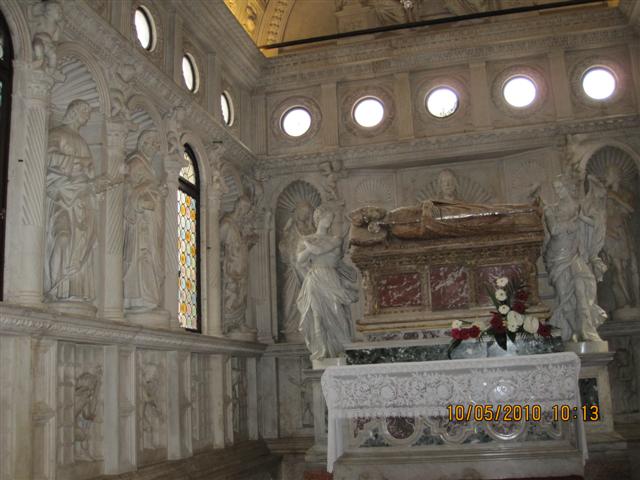
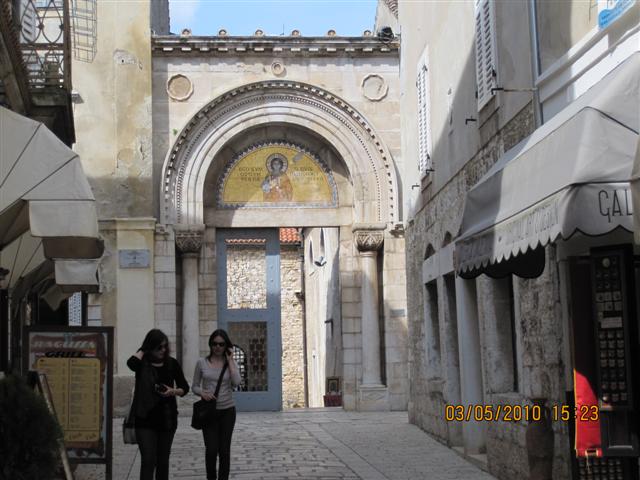
We started in the North, in Istria. Geographically, culturally and often in the past historically separate from Croatia the triangular looking peninsula and is very much like Italy. We started off on the west coast driving south along the coast line, stopping off to see the towns of Umag, Novigrad, and Porec. At this point I must mention that Croatia has the most amazing and beautiful very old churches in all the towns we visited. Hence two things must be said now, 1, it is impossible to relate the interiors of all the churches as there were so many and, 2 that both Wolfgang Maier and Wolf (as I will refer to them in the blog so as not to mix them up) were driven demented to how many churches Erika and I wanted to visit. Umag and Novigrad small harbor towns with lots of street cafes and the start of the little harbors filled with all types of boats of all sizes and shapes. Porec, in the part of the old city, a lovely Basilica, built in an ancient square by the Romans. It was called the Euphrasian Basilica and Bishop’s Palace. It was built in the 6th Century by Bishop Euphrasius (hence the name) and it one of the surviving examples of Byzantine art. Wonderfully preserved gold gilt and mother of pearl mosaics which shine and make it quite easy to understand the age. Next door to the church is the palace which is now a museum with consists of mosaics gathered from earlier churches. We then went further south and stopped at Vrsar, which is on a fjord-like slice of pretty green water. Here we set up our camp at a super camp site, Oresera. From here for the next two days we drove and visited the south of Istria visiting the towns of Pula, and Rovinj. The town of Pula has an old Roman Amphitheatre which has been partially destroyed but still hosts different big events. We went down to the underground corridor where the lions were kept in Roman times and through a long tunnel lined with Roman Masonry and also the remains of how the olive oil was produced. Pula was a Roman colony a century after the Romans arrived in 177BC. It was a thriving urban centre with a forum, temples and city walls. Some of which are still standing. Some of the well preserved walls are used as backdrop for the film festivals and quite a few concerts take place here every summer. Other sections, the Golden Gate was built in 30BC and the Roman Forum and the Temple of Augustus still standing. Two beautiful churches, the Franciscan Church and the Cathedral, both two old Gothic style churches. We were treated to a very inventive “Music Man” Only the picture can tell the story; see the blog for a photo but to go with it was the most unbelievable sounds which came from each music instrument strapped to his body. We then moved onto Rovinj, when arriving in the town it started to rain and a lovely restaurant in a little passage, “ called us” into the dry and cosy atmosphere and here we enjoyed a lovely lunch, with good wine and both Wolfgang and the two girls quite mellow. Shame our driver (W) could not have even one drink. (There is a no alcohol law for drivers in Croatia) With the rain lifting we went down into the old Quarter, to a stunning harbor and a lovely village. The harbor is nicknamed the’ cradle of the sea’ by the ancient mariners because of the archipelago of islands stretching from here to Vrsar ensured in calm and untroubled waters. The old town is very attractive with old houses painted in cheery Venetian reds and Habsburyg pastels, with cobbled streets barely wider than a footpath. Unfortunately the beautiful Cathedral of St Euphemia, perched on a hill and not accessible by car. The trip up to the church would have taken Erika and I at least about an hour up, an hour at the church and a half hour back. A unanimous decision (ha ha, it was the men’s faces that did it) we took a miss on it and us girls decided we would get back the time at a later stage. Pictures from afar had to be good enough.
The next day we moved from Istria to the island of Cres, one of the largest and less developed islands. We crossed from Istrian at Breskova to Porozina, a very short ferry, just under an hour. We decided to camp mid way on the island so as to be able to travel by car and see the island the following day. We camped at Slatina on the beach front. In one way, our weather was never perfect but at least we had really good choices of camp sites and this one, was right on the beach. The beaches in Croatia a little bit pebbly and not very sandy but all the same really clear and clean. Erika and I managed two lovely walks while we were there. One over the rocks and another around the camp site, an easy 2km stroll. You will realize that our husbands are not really fond of walking and it was lovely to have company to walk with. Most of the camp sites are very big in Croatia, some with 1500 camp sites, we tried to stay away from the very big ones, but as we were really in an off season we weren’t overrun with campers. While on Cres we visited Losinj, an Island accessible by a bridge, again super waterfront, lovely little streets and waterfront cafes, for wine for the ladies and ice cream for the men, watching people and boats. Again, a little church, Church of St Anthony. Stopped at little villages on the way back and as the weather was good, had one of our walks and a “chill” afternoon with a braai that evening. Left the next morning over the ferry from Cres to Krk. The town is surrounded by a wall which dates to pre-Roman time and the oldest of the towers in the wall was built in 1191. We were only able to find an illegal parking just outside and managed a short walk up to “Cathedral of the Assumption” yes another church, built on the site of an early Christian basilica and dates from the early 1200s, with a bell tower from the 16th Century. The “Castle” with a cylindrical tower is Venetian as are the three city gates and the rest of the wall. From Krk we travelled back onto the mainland, again one of the islands connected with a bridge, and then south by passing Zadar and settling near Sibenik at a camp site, Oaza Mira, which Erika and Wolfgang had stayed before. Again had a camp facing the water. The next morning we woke up to rain, so Dawn got a reason for staying in bed a bit longer, then leaving at about 11am we went to visit Sibenik, again another old city. Visited, yes, another Church, the Cathedral of St Jacob. This little old town of small alleyways which look like they lead to nowhere but at every turn you see something. A lovely medieval Mediterranean Garden of St Lawrence, up one of the little alleys almost on top of a roof, where you would least imagine, a garden to be. It has a water feature and the garden is made up with four areas filled with traditional plants and herbs, roses, capers and a section devoted to several different colored varieties of thyme. Going further up the hill in another alley you get to the top and find a graveyard still being used today, even places for people who have not yet passed on but their name already on the plaques with the rest of the family. All that’s missing is the date of death!! At the top is St Anne's Fortress. Built during the Venetian rule as protection from the Turks and now really is no much to see except the view across the estuary to the surrounding islands. One of the most “famous” things in this area is the “kanoba” The traditional konaba is a very rustic original old private cellars with wine barrels, hams hung out to dry and vats of pickled vegetables and fireplaces for preparing food. Today all the new restaurants in the old quarters all try and copy the idea and many old stone houses turned into restaurants. One of the specialties’ in this area are Pig or lamb on a spit. Most of them with the spits easily seen from the front of the restaurants, to entice you in. Wolf wanted to sample this and eventually we were all teasing him about his “Sexy Ferkel” (means sexy pig) Well as our driver (who was never allowed a drink) we thought we better oblige and he had his lunch that day, his Sexy ferkel. After lunch we went onto another island, accessible by a bridge, called Murter Island. Both Wolf and I were so impressed, we made up our mind to have some time here on our return journey after Wolfgang and Erika leave us. Us girls managed at least a quick look, yes you’ve guessed, another church, a little village one with a nice bell tower. More from Murter when we go back. Sunday and we had arranged to meet Christina, (my life savior getting my visa) for coffee in the old town of Zadar. We needed to thank her for the inconvenience of running around to get a statement signed by an attorney to confirm that we were visiting her. Even she was surprised at the rigmarole of getting a visa for Croatia. Not even my German permanent residence was enough for the Croatian embassy. After having coffee with her and visiting the local market for fish we spent two hours visiting the old city of Zadar. This city again goes back to the Roman time and the main sights, St Donat’s Church, the Zadar Cathedral and the St Mary’s Church and Treasury were all on the agenda. All really beautiful as our photos will tell. The treasury is filled with extraordinary old relics saved from the church history. But the most amazing sight this town had for me was a “Sea Organ” Thirty five organ pipes emit unworldly tones through holes bored into the smooth paving stone on the harbor. Their size and sound are determined by the waves of the sea. Not only did the same designer build this, but he added to it, building the “Greeting to the Sun” it comprises of 300 multi-layered glass plates in a circle and synchronized with the same wave energy. Beneath the glass are solar modules that come into life at sunset to simulate our solar system. The old city is surrounded by a wall which in parts have been destroyed but there still are three gates still standing. The Port Gate, one of two Renaissance stone entrances to the town, carries the carved "Lion of Venice". Also the Venetian Land Gate, where you also see Five Wells from the old Roman times. We had lunch at a little street café and then went on back to our camp site to enjoy the view and plan the next part of our trip.
From Sibenik we headed south to Trogir and then bypassing Split onto Omis and DugiRat and then past Makarska (the Riviera of Croatia) and went onto a Ferry to take us onto the island of Peljesac to a super campsite called Naveo on the west coast of the island. We stopped at Trogir for a couple of hours, the old town reflects the influences of previous Roman, Hungarian, Venetian, French and Austrian rule. Its walled medieval centre is made of narrow cobbled streets from the Cathedral Square to the wide seafront promenade. The old town stands on an island separated from the mainland by a man made canal and linked by a road bridge. Again you cannot visit the town without seeing a church, this one, the Cathedral of St Lawrence which took 300 years to build and finished in 1240. The 47metre Bell Tower has the most magnificent view of the town and surrounding area. A 15th century Venetian Palace was built for a rich Croatian family. The drive via Omis, Dugi Rat and Makarska will remind you of the trip around Camps Bay in the Cape. The mountains rise up directly behind the houses and to the other side you see the wonderful drop view of the sea. Just one beach after the other, with cafes, bars and restaurants. Some new stunning hotels being built along the coastline. The area known as the Markarska Rivera is a 60km stretch of mainly hotels and stunning apartment blocks with beautiful beaches and stunning views. The choice to go onto the island of Peljesac, was one of two reasons, at the time of applying for my Croatian Visa, that a very small section about 23km belongs to Bosnia (this gives them access to a harbor) and we applied only for a single entry visa and going through this piece would mean a second entry and unknown was a Visa for Bosnia. So our way out was to cross over to the Island of Peljesac and enter back by ferry into Croatia just outside of Dubrovnic. Our 2nd reason was because we were quite keen to see the Island of Korcula and to reach that we could do it from Peljesac Island. The Ferry’s out of season can be quite tricky as they are not as regular as in season. We were just really lucky with the one to Peljesac, we arrived and they had space just for us two, you never saw men move so fast to get tickets and get on, our wait would have been another 4 hours. We stopped at a super camp site called Naveo for a night intending to do Corsula first for a couple days and then return and do the whole island on our way down towards Dubrovnik. Again very lucky with Ferry to get on but our disappointment was not finding a campsite. The one we were recommended to stay at was still closed (quite a few campsites and even hotels and guest houses close for the winter.) Most open on 1st May but this one and the next and the next don’t open until June. Very disappointing, eventually we found a “small” campsite in someone’s garden. Actually it turned out quite well, so after settling, we drove into the old town of Korcula. This town’s harbor and later Dubrovnik must be the most visited by big ocean liners. There were two Cruise Liners in the bay and were ferrying on the smaller boats their passengers to the islands. This of course meant we had to share our space with dozens of “Foreigners” (note we don’t call ourselves that) but all in all a lovely old town. It is one of the islands which have managed to avoid every type of tourists but rather enjoyed by the older generation. It has one of the best preserved medieval centers in Dalmatia. Unlike Dubrovnik Koruna was governed by the Venetians and they were responsible for the layout of the Old Town. The streets are laid out in a herringbone pattern, those running west are straight to let the westerly breeze in on summers days, those that run east are curved to keep out the chilly winter Bora (that’s the name of the wind) Wind from the north east. It is also supposed to be the birthplace of Marco Polo. Again one of those towns which used to be completely walled in. Entering the town from the south, you pass through the Land Gate erected to mark islands gallant defense against the Turks. It then takes you onto a stone bridge and the Revelin Tower which bears the Venetian coat of Arms. A small chapel dedicated to the Miraculous Virgin of the island. The main street, takes you to St Mark’s Cathedral with one of the most finest e.g. of architecture and design It took three centuries to complete and because of this the styles vary from Gothic, Romanesque to Baroque. There is a 13th Century icon of the Virgin who was prayed to for salvation when the Turks threatened in 1571. After the men managed to walk with the ladies to all the churches, we were treated to a demonstration of how ice-cream should be served. It’s almost like pancakes been thrown up and over, the ice from the container into a ball and thrown up and onto the cone, then the second and the third and they all end up looking like a shape of some sort. The ladies were given special ones with umbrellas and really done well. (See the blog photo) We then took a drive to the other end of the island through Pine forests, vineyards and olive groves to the town of Vela Luka. Unfortunately it started to rain so we had a quick walk around the harbor and returned back to our “Garden Camp Site” where as Wolfgang’s words were the best part of the site is the Braai. So we used it and had a good evening, and it felt like home. The next day took us back to the Island of Peljesac. The drive down this island was absolutely stunning but impossible to find a camp site which was open and could fit our “rather large homes” in. Either too steep, or terraced or even one next to a grave yard, which under no circumstances would Erika even entertain the idea? We teased her silly about the “people knocking on the door that night” etc etc. We really enjoyed the drive down one of those islands which you can really see almost both sides of the coast line at different times. We eventually settled on the south of the island about 5km from Ston. Ston is really two towns in one, linked by a hilltop of Wall. Stone-Veliki (means Great) distinguishes it from its smaller sister of Mali (small) Ston. Half of the 14th century tower and walls remain. They survived the earthquake of 1996 which destroyed houses in both towns. Ston’s natural lake-like bay has been home to mussel and oyster farms since roman times. Besides a super walk up the wall, on which they have put a rail onto, so making the walk quite easy. (Some chose not to walk others half way up and only one to the top) And, we found ourselves a really nice restaurant in one of the small streets, Bakos, and ate Oysters for Starters and mussels for mail. Of course the girls had to sample the local wine which Peljasac is famous for. Peljesac is famous for their red wine. In the Dingac area where the Plavac Mali grapes grow. Only in this area. and only on the underside of the peninsula between the town of Podobuce and Trstenik are actually called Dingac. The land faces south west and get the sun, the calcified rocky soil retains the warmth and encourages only the best grapes to grow. But if you see the hill it is grown on, it is unbelievable that anything can grow. The hill is so steep that they used to use donkeys to go up the mountain to fill the baskets and go back again. The residents eventually built a handmade 400-metre tunnel through the hill connecting town and to their grape vines. It was built with their own money during the communist era. From bottom of the slope, the sea has a straight edge, 300mts down. But for the wine it works. After spending two days in on the bay, we moved on, going back over to the mainland. Here the island is linked to the mainland by a bridge, so no need for Ferry. We chose to stay just outside of Debrovnik as to make it easy for us to see the city. We actually tried to find a camp site for our return journey just outside, this was an impossibility. Our vehicles to big for the small places and the amount of hotels and apartment blocks being built now leaves not much for the camp sites. By this time our weather was changing and not looking to good for the next few days, so we made camp quickly and took a drive down south to Cavtat. It is the most southernmost town in Croatia. It is built on the old Greek and Roman settlement of Epidaurum which was invaded by barbarian tribes in the seventh century. Again of course, we cannot go without mentioning the church, The Monastery of our Lady of the Snow built on the hilltop tip of the peninsula. We had a super walk right around the town which borders on the sea, the sea is beautifully and clear. A round walk of about 4km. Quite a nice sunny but windy day, and little did we know but that was the end of the good weather for our time with Wolfgang and Erika. We all woke up in the night with the heaviest of storms we had had since arriving in Croatia, the morning seemed no better but by 11am it had eased and we took a bus from the Camp Site into Dubrovnik is a city squeezed between sea and mountains, encircled with stone walls. We saw this city in rain with dozens of tourists all trying to find shelter when it came down, not a city for someone like me who is not fond of crowds but saying that, a city which should never be missed. Their statistics of 250 sunny days per year and only 14 rainy days during summer was way off target, but the weather was the only disappointment. Dubrovnik as an urban centre introduced medical care in 1301, and opened the first pharmacy in 1317, one of the oldest in Europe and has worked up to the present time. The city was hit in 1667 by a severe earthquake and a great part of the city was destroyed. Many valuables and citizens were lost in fire. The city recovered slowly and in the beginning of the 19th Century Napoleon’s marshal abolished the free Dubrovnik Republic. It continued to live through the rule of Austria, France, England, Russia and Turkey. But the city lived on with a slogan “freedom cannot be sold for all the gold of the world” It then endured the 1991 & 1992 greatest aggression, the Serbian and Montenegrin killing of its people and shelling of it buildings. Courageous and defiant Dubrovnik proved that “freedom is the measure of Freedom” and it returned hatred with goodness beauty and truth. Some say the city is a city of art, others city of architecture and some a city of history, a city adorned by poets and painters but altogether this is a city monument. Stone is the ruler in this city. The stone of its streets, squares, palaces, houses and churches. The city is completely surrounded by wall even on the sea side; the only un-walled piece is where the harbor is. The city was in times gone by protected by four different Forts. To the North the “Round Minceta” completed in 1464, to the east the mighty Revelin built in 1462, the southeast, the imposing fort “Sveni Ivan from the 16th century and to the west the entrance to the city by “The Bokar"(means Starlit) built from1461-1463 This huge Fort defends the town to the west and was built on rock 37 mt high and built in the 14th century. Two fortified gates gave entrance to the city. The East from the 15th Century (Vrata OD Ploca) and the West from, 1537 (Vrata OD Pila) On this the draw bridge was raised by strong chains and closed the entrance to the city. The stone Figure of St Vlaho (St Blasé) watches over this gate. Again, what gets first mention is we saw 5 churches, Church of Salvation, built in 1520 and survived the earthquake; The Franciscan Monastery also 15th century to some of the interior completed in the 17th Century; St Blaise’s Church, built in 1706 to 1715. It survived the earthquake in 1667 but was destroyed by fire in 1706; The Cathedral, Our Lady’s Assumption erected in the 13th Century, destroyed in the earthquake and rebuilt; and the Jesuit Church built in the 17th-18th century. This is reached by a Baroque stairway. Obviously each church has different alters, but all adorned in various different ways dependent on the time and some with a lot of gold, but all really beautiful. The main street has a line of stone facade of houses. The street named “The Stradum” is the largest city street. (Nothing like what we would compare “wide”, but wide to their words) Lower down in this street you find a large square where different processions and festivities are held. Two Fountains there were built in 1520 A Dominican Convent was built in the 13/14th century for a home for orphans (They were called foundlings) It was later a school and now a museum. The palace Sponza was built in 1516 and survived the earthquake, another palace, Rectors Palace is a magnificent Gothic-Renaissance palace and was built and rebuilt for centuries, it was damaged by fires, explosions and the earthquake. It is now a museum with preserved furniture, portraits and coast of arms of Dubrovnik Republic and other valuables. Outside in the square is the Clock Tower, built in 1444 and it is 31 mts high with huge bells cast in 1509. The bronze figures (now green) strike the hours, There were many other different buildings, the Jewish street and synagogue etc.. If ever visiting Croatia, a city never to be missed. Down came the rain, so we finished our day with a late lunch in a little restaurant in a small alley and enjoyed the ambiance. The rain really spoilt our last day and with the weather report being of a similar tone for the next few days, Erika and Wolfgang decided to leave us a day early. We all moved on the next day to our previous camp site at Ston, so that we could have a recurring meal of Oysters and whatever touched our fancy to say goodbye, the Maier’s back to Germany and Wolf and I to have another 8 days in Croatia.
We got up to bade farewell to the Maier’s and then as the weather was still quite overcast, we decided to move north of the island and try our luck with the weather. We were actually treated to some sunshine on the way back and settled at a camp site which we had previously visited and had noticed that they had a few sites right down on the beach. Actually trying to get the caravan down there was a bit of a mission, (a S-bend half way down and having to push and turn the caravan into the small camp site), but the wonderful view we had made up for the hassel. Here we settled for three nights, one day doing the wine route and visiting the little towns of Trstenik, Dingac, Orebic, Postup, Porobuca, Potocino, Viganj and Loviste. The region spreads 40km in length beginning in Trstenik and ending in Loviste. Orebic is the biggest town on the peninsula and at the highest hill St Ilija, overlooking the Peljesac channel and Korcula Island. Of course there could not be a day without a church or two and we managed to see the Franciscan monastery from the 15th Century and another on the hill 150m above Orebic, Church Gospe of Andela. For me the best was to find the tunnel, which I mentioned in describing the Pelsec wine, which the residents of the area, had built but when going through the area with Erika and Wolfgang we had missed it. Very easy to see it was handmade and quite different to the tunnels done with machinery. We had a super lunch at a little Italian restaurant, on the coast, in Vigani. The next day, a visit to Trpanj, the harbor where we would cross over back to mainland, and one that only has 3 ferries per day, during the out of season times. An enquiry into this did us well as the queues proved to be really long and this ensured that we would make sure we would be two hours before the departure of the lunch ferry the next day. While there we had a super walk around the old city and also visited the two neighboring seaside beaches of Divana and Duba quite famous for windsurfing. Obviously being out of season, it was still very quiet and we could not even find a restaurant open. We had such a wonderful camp site we decided to enjoy it for the rest of the time, the weather being kind to us and we just chilled, drank and ate and enjoyed the seafront. Crossing over the Ferry the next day, was pleasant beside a bit nerve-racking to fill the Ferry to capacity and us being the biggest, although being the first, were the last on and squeezed like a sausage in a hot dog. We headed back north to Murter Island, and inspected out two camp sites one, we found was an FKK beach, (naked beach- Wolfs description, is bells and ropes hanging free) had a laugh and moved onto the other side of the island and found one on the bay of Betina. (I bet you all our male friends, are making remarks now, Oh Dawn how can you be so cruel not to leave Wolf to have time to let the eyes rove!!!!) Betina was quite nicely situated about 2km from the little town and this became our exercise for the next few days. A super walk into the town enabled us to have that extra glass of wine, or a little extra bite. (We were still trying to take off the kilos which we put on with Erika and Wolfgang) As the weather improved it was time to enjoy the sun. From here we visited the Krka National Park. It is an area of 109sq km encompassing the basin and the course of the Krka River. The river and 7 travertine cascades. Travertine is the basic element that forms the park. It is a porous carbonate rock formed by the sedimentation of calcium carbonate from water. It builds barriers, sills and other forms in karst rivers and streams. It accumulates on living elements. (moss, algae, etc) This forms various geomorphologic forms. Not a National Park of animals, but the flora and fauna is amazing. The birds can be heard in the trees but with the dense bush we were not lucky to see much. We took a boat trip up to the island of Visovac which is a site of the Franciscan Monastery of Our Lady of Mercy. Today it is still used to train Franciscan Monks. It is a tiny island (picture on the blog) which you can walk around in an hour. From the island the boat then goes onto to Roski Slap (waterfall) The beginning of the barrier consists of a series of small cascades (the locals call them the Necklaces) followed by lots of branches, backwaters and islands. The canyon in this section widens like a funnel and the largest width measures about 450m in length and 650m around. The total difference in height is 25.5m. The main waterfall falls from a 15mhight into the Visovac Lake. Travertine forms at these falls, and include caves, tufts, thresholds, and also cones. The cones at the foot of the waterfall represent a unique feature of the falls. A road crosses the travertine cascades and connects both banks and has done since the Roman period. We visited the one bank where there are a few small mills, some are still working today. The remains of a Roman Military camp of Burnum are located on the right bank of the river directly above the cascades. It was constructed somewhere from the 1st century BC to the first century AD. Not a lot of it remains but what can be seen is the remains of the arches and a large sunken amphitheater which was recently discovered and an inscription from 76/77 Ad confirms the dates. Excavations are being carried out now to preserve the remains of the amphitheater.
We booked a trip to the Kornati Islands, (which is a National Park) it is made up of 140 islands in an area of only 35km long and 14km wide. Sailing from Murter is only twice a week and depends on a minimum tourist numbers. Unfortunately it was not to be, arriving on the day booked, to find it was not going. We decided while the weather was still good to move inland and into the Plitvicka National Park. We were quite sad to be leaving the super coastline. The Plitvicka Lakes have a surface area of 294.82 sq km. It is the largest of Croatia’s eight national parks. Its basic description of the rock, Tufa or Travertine is the same as described for the Krka Cascades but its absolutely enormous and here travertine formation process is constant and numerous. Magnificent waterfalls have been created. Over time, the water changes its course, leaving some barriers dry but stimulating tufa growth in other places. The lakes and waterfalls are all different in height the lowest lake about 530mts and the highest 712mts. There are 13 lakes and main waterfalls but with many little ones forming from each one. Only photos can do justice to this description and I will post some pictures on the blog. Of course here the video is better, so much so we even bought a professional video of the park. They do have Brown Bears, Wolf, and some cats (lynx, wild cats, etc) but on the normal walk ways, they cannot be seen. You can choose different walks, (easy, midrange and longer ones) Wolf must have been in a good frame of mind as he decided we could do the second longest, about a 6km walk. A walk first around about one third of them along wooden walkways, from these walkways it takes you to the top of each fall and to each lake from where it falls. Views from the lakes and falls absolutely amazing. After about half the distance, a short boat ride takes you down one of the lakes for about 2km and after this we did the rest of the walk, a lot harder and steeper and more amazing. The broader part of the park hides rich forest and meadow habitats with many species of plants and animals. The forest is mostly made up of beech and fir trees. Of interest, is a “Corova Uvala”, this is a virgin beach-fir forest, one of the most beautiful forests in Europe. After the second half of the walk, you catch a “train “ back to one of the entrances. All in all a most amazing, “never to be missed” experience in Croatia. Back at the entrance was a restaurant recommended, so we had lunch there and while waiting for our food, heard a very familiar accent, “Afrikaans” What a lovely surprise to chat, the Retief family came from Cape Town. They live in the Stellenbosch area. Also keen campers and had just come from Angola. So hopefully we will correspond and Carol has promised to let us have some info on their trip to Angola. They were only starting their two week holiday, so we hope they all had a stunning time in Croatia as we did.
We left Croatia the next day to return to Austria, where we had been invited by old friends to share some time. Saturday took us on a walk up a mountain, (only 450m at the top) and a lovely little tiny church and a bell which you ring when you get to the top. I think it was the only reason Wolf made it to the top. Lunch at the bottom of the mountain, in a super little restaurant run by the owners of the farm and friends of Gus. Ate far too much and Wolf being able to drink as Gus had driven us there made up for when he had to abstain, being the driver. Usually at this time of the year Gus helps the farmer to herd his cattle up the mountain for the summer. As it turned out it was the same day we had arranged our walk, so Gus had to do without his “yearly fun” and herd us up the mountain instead!!! Sunday we shared with a old working colleague of Wolf’s, Bertie and his wife Edith, who I had met and done a short travel trip with in China. Bertie and Edith, thank you so much for your hospitality and friendship. What a wonderful time is was to rekindle a friendship of over 20 years ago and in a short time, we were chatting and doing all the “remember things”
Time to leave Austria and soon crossing the German Border where we started the “English Visa” saga. More of that when I start our Scotland Blog. Hopefully there will be a Scotland trip. The visa not an easy one!!!!!
A break here in Croatia to be able to update the blog